Loading…

Loading…

Everything Baseline shipped between September 16 and October 5, 2026. The Marketing module gains a Keyword Ideas tab, local search volume on Local Traffic, a Citations scan with per-site listing builds, and ad journey charts that follow each click to a purchase, sign-up or lead. The AI Event Builder builds a whole schedule from one prompt or an attached spreadsheet and takes voice input, the event cloner creates every copy at once, and the Create Event builder, Team Builder and Users list each get a Customize button. Trainers edit their own trainer page, Settings is redesigned with grouped navigation and search, mobile app 1.6.0 rolls out, and dozens of fixes land.
The Marketing page is now a local-search intelligence tool for facility owners. Your share of the clicks on Google Maps, Google Search, and Google's AI answers for the searches families run nearby, a map of who takes the rest, a Google reviews comparison, a benchmarked Google Business Profile scorecard with plain what-to-do instructions, and a Growth tab that prices the missing clicks in your own revenue. Three-step setup, then weekly Monday snapshots with admin alerts. Also in this release: grid colors by category or trainer, deep-linked admin notifications, itemized invoices, a rebuilt mobile app navigation, events built from a file, and dozens of fixes.

Real conversations inside Baseline. Coaches message athletes and parents, members reply, and every thread lives next to the schedule, teams, and billing they already use. Group chats and announcement-only threads, group chats opened from message blasts, pin, hide, and mute for every person, and a summary email with a one-tap sign-in link when someone has missed something. Off by default until an admin turns it on.
Read More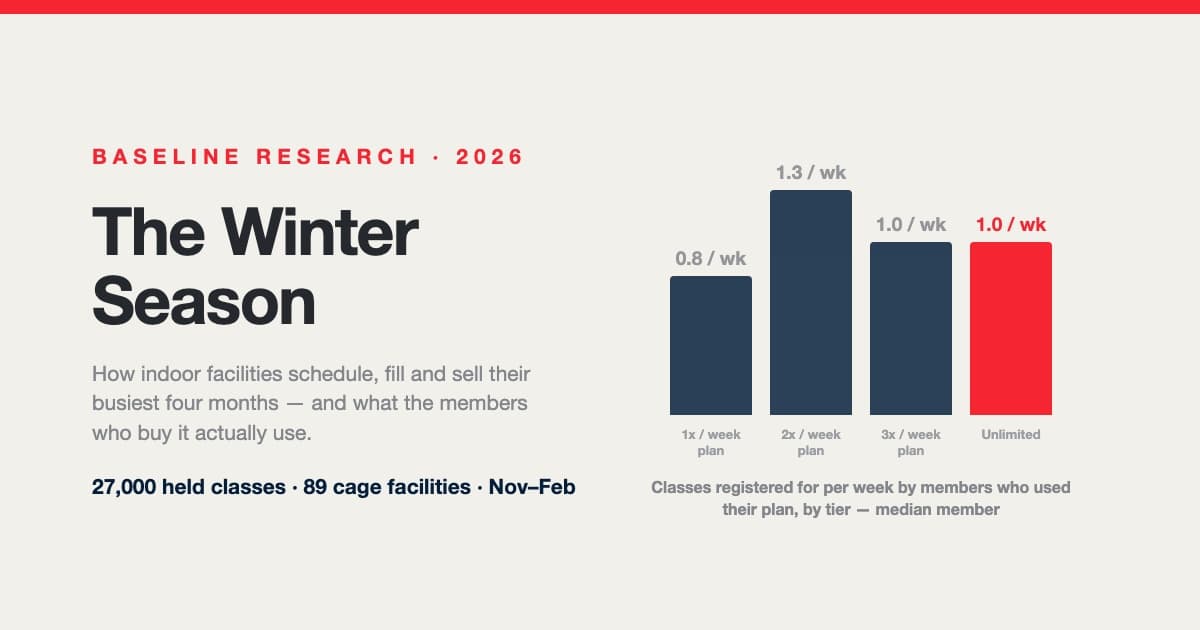
Winter is the season an indoor facility is built for, and every autumn operators rebuild the same schedule from instinct. Across 27,000 held classes at 89 cage-equipped facilities: pitching needs nearly as much room as hitting, the median class has three or four athletes, one hitting program in ten runs every prime hour, classes tie up two-thirds of the cages only at the busiest hour, “unlimited” members come about once a week — and the plan a family buys, not how often they come, decides when they leave.
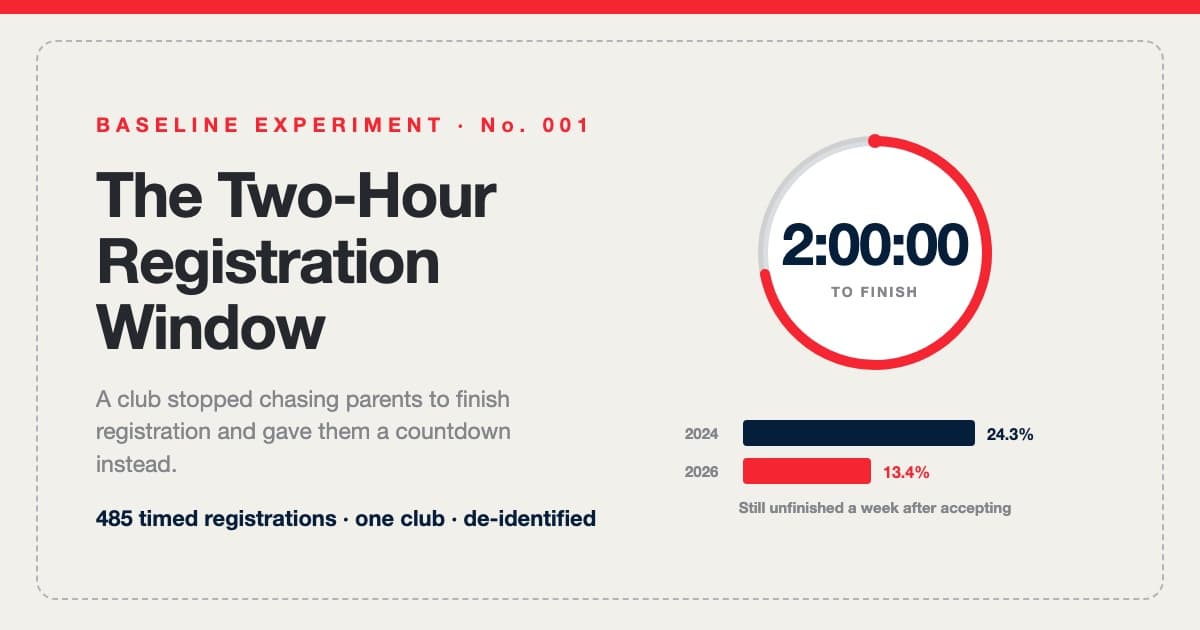
One large youth baseball club was tired of chasing parents to finish registration, so we gave families a 120-minute countdown instead. 485 timed registrations later: completion held, the week-old follow-up list came in 45% shorter, and 95 of 98 second windows opened with the family already in the form. The full experiment log — including the claim we couldn't verify.
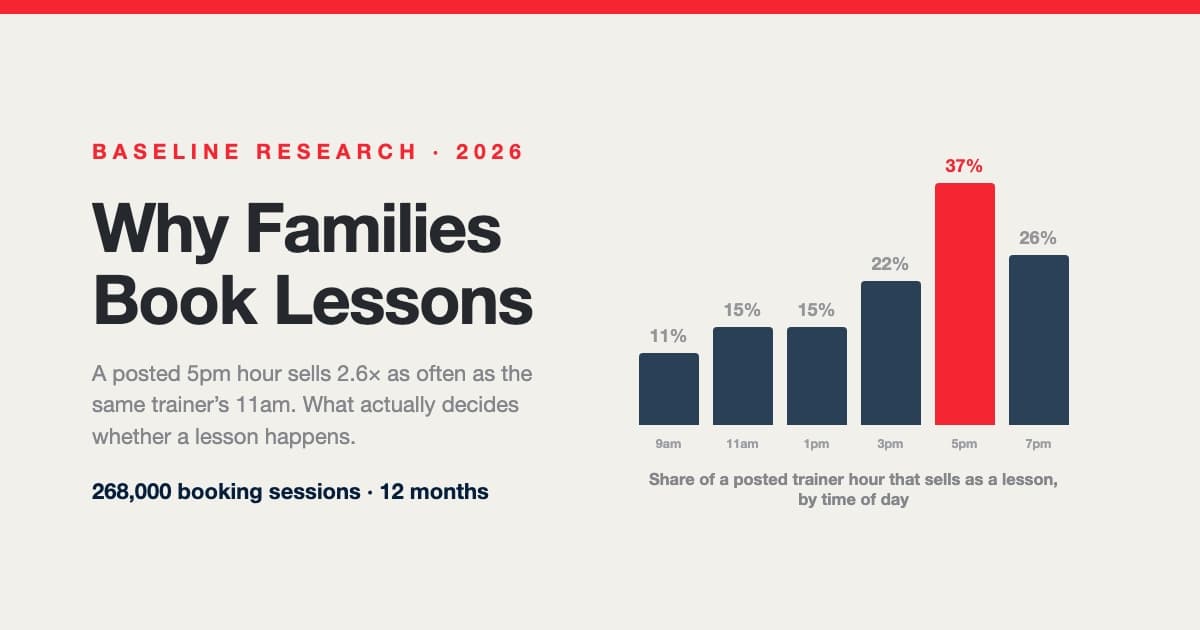
A posted 5pm hour sells nearly three times as often as the same trainer's 11am. Across 268,000 booking sessions, 29,812 families and 107,000 posted trainer shifts, what decides whether a lesson happens isn't price, sport or lesson length — it's which hours are on the calendar and how late families go looking. Including a measured answer to the question every operator asks: do 15-minute intervals actually win you bookings?
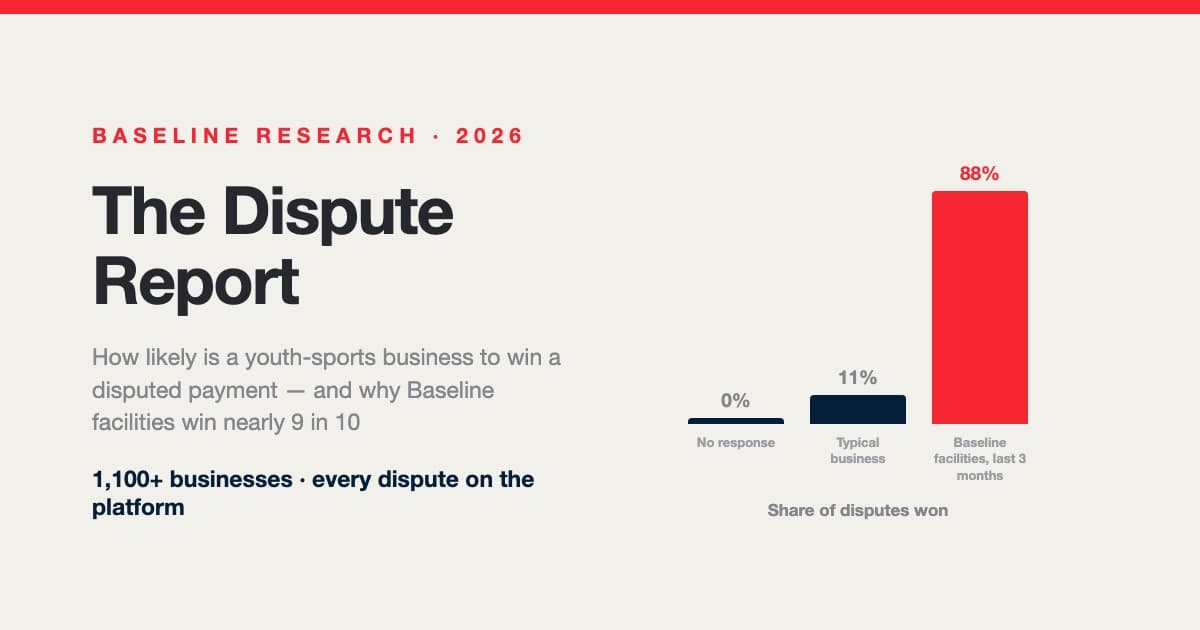
Industry-wide, businesses answer barely half of their chargebacks and recover about 1 in 10. Across Baseline's platform of 1,100+ youth-sports businesses, 88% of closed disputes were won over the last three months — with 90% of responses filed without anyone touching a thing. How disputes actually work, what gets disputed at sports facilities (and which purchases win), why fraud codes are hardest, what each card network wants, and the pre-documented evidence system behind the numbers.

Every trainer now has an AI assistant that already knows their schedule — they text it to book lessons, message clients, and line up follow-up jobs. Support AI got faster and better at reading the situation, a new AI Chat answers plain-English questions from your own data, admins can build one-click shortcuts, and the calendar picked up week and month views, ICS subscriptions, and Google Calendar V2 for everyone.
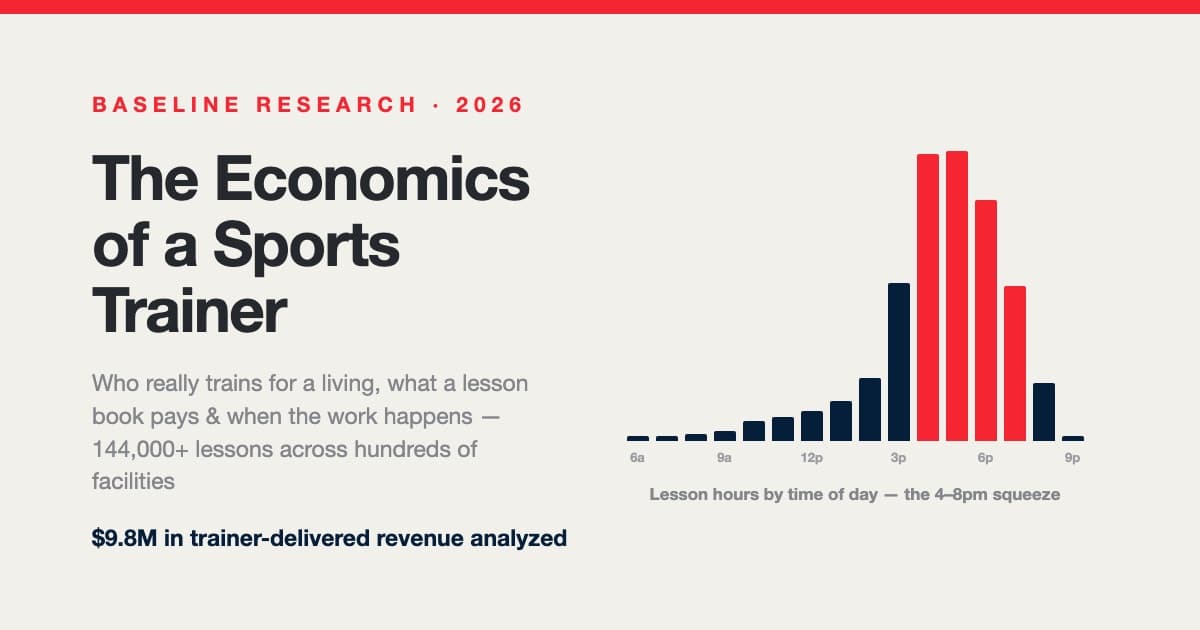
Inside a research cohort of training facilities: the full-time lesson trainer is nearly mythical (median 3.3 delivered hrs/week; 4.4% sustain 15+), the trainer split is a spectrum anchored at 50% and 60% that realizes near 47%, lessons run ~$104/hour in every discipline but strength, the median client book is 8 actives on a 90-day clock, and continuing books swing from −61% to +192% in a year — the numbers behind hiring, comp design, and the dependence ledger.
Group lessons and event payment plans are live, cloning finally works for memberships and categories, and support now knows who you are before you type. Underneath that, 134 fixes: a Google Calendar integration rebuilt from the authentication layer up, a long list of sign-in problems closed, and duplicate roster players cleaned out of the facilities that had them.

More than 40 releases since the May Teams rebuild: a new Reporting tab with the Memberships report, machine-learning churn prediction, MRR forecasting, rebuilt messaging infrastructure, registration and gap medical insurance at checkout, and a long list of Teams, membership, and payment improvements.
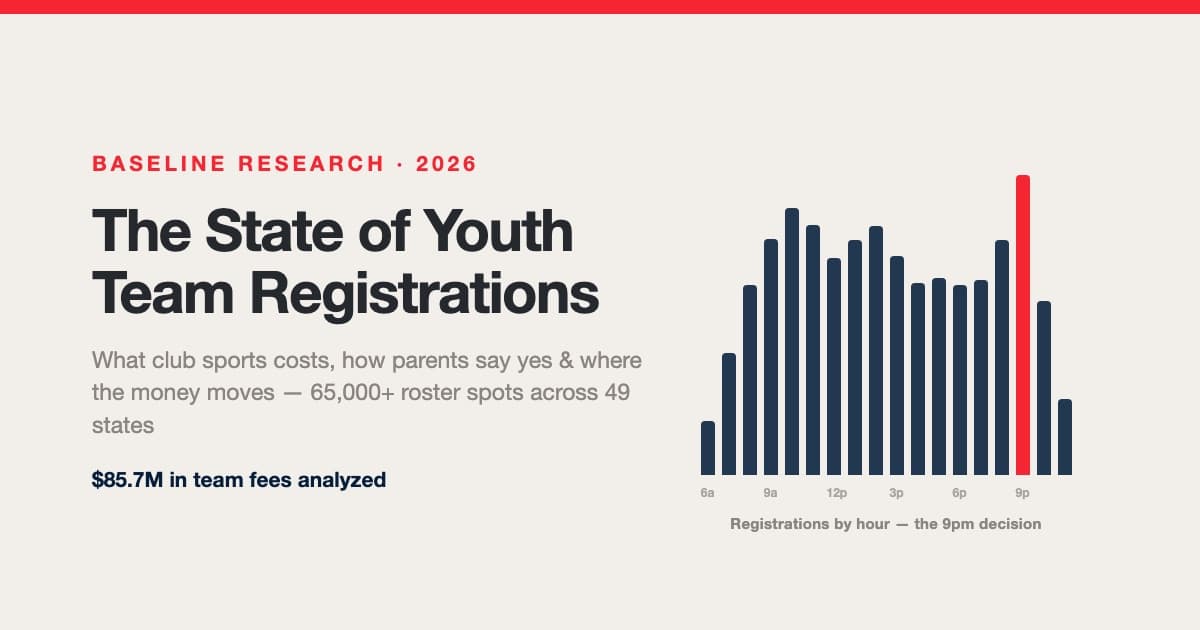
We analyzed 65,000+ roster spots and $85.7M in team fees across 337 club businesses in 49 states. What a season really costs by age and state, the $300 deposit standard, the ~15-point collection tax on cash-and-check dues, the 3x recollection gap between clubs — and the one screen where families pause on the way to a completed registration.
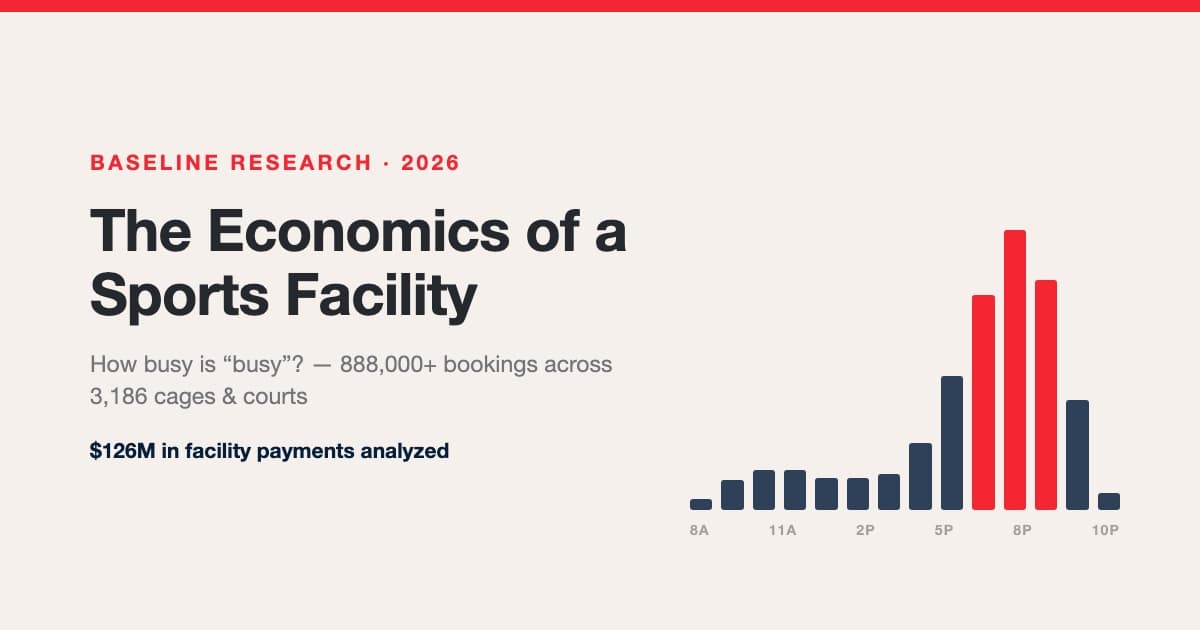
We analyzed 888,000+ bookings, 863k space-hours, and $126M in payments across hundreds of sports facilities. Real utilization benchmarks (facilities are spiky, not empty — 2 in 3 sell out prime hours while averaging ~19% occupancy), rentals vs lessons vs group economics, the true lesson margin after trainer splits, credit-pack accounting, seasonality by category, and the occupancy ladder from quiet to packed.
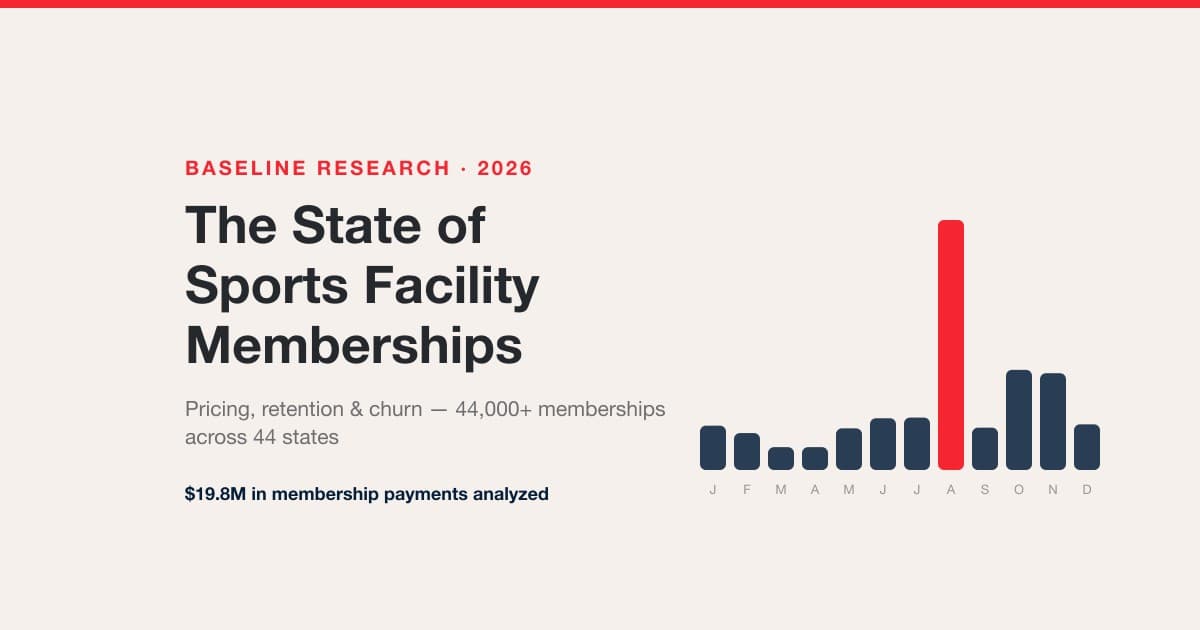
We analyzed 44,000+ memberships and $19.8M in membership payments across hundreds of sports facilities in 44 states. What facilities charge by state, which membership styles retain, why annual billing doubles lifetime value, and the churn playbook the data supports.
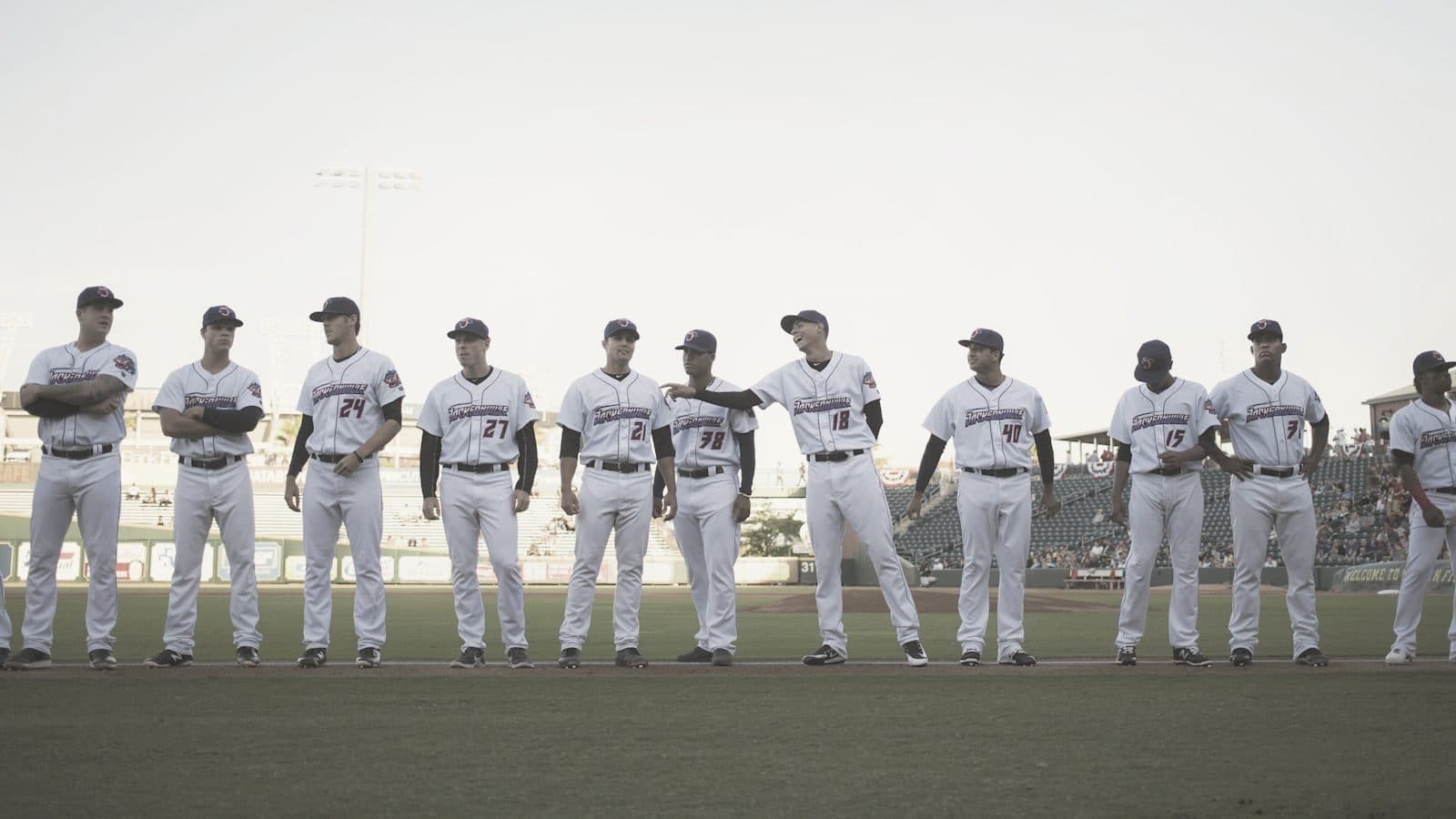
A complete platform rebuild: text-based team registration, automated payment recovery with Magic Recollect, AI team and payment-plan builders, Home Facilities, a drag-and-drop Roster Builder, and end-to-end tryout management.

Only 7% of sports training facilities ever reach $1M in annual revenue. Drawing on operator data presented at the ABCA convention, here are the patterns that separate them — and the myths that don't matter.

A data-backed operator playbook from Baseline cohort research: the four operational levers that move the needle in a facility's first year — and the four things you can stop worrying about.

Subscriptions are a fixed monthly burden; transaction-based pricing scales with revenue — and can cost nothing if you pass fees through. We model the real numbers across facility sizes.

A full marketing toolkit inside Baseline: track Google and Meta ad visitors through to sign-up and revenue, give every program a short link, capture leads on custom forms, control your own SEO, and build custom web pages.

A revamped workouts page with at-a-glance previews, retooled email infrastructure that sends 1,000 emails in about 16 minutes, one-click charging for multiple private events, and a batch of bug fixes.
Only 7% of sports training facilities reach $1M in revenue — and the difference comes down to systems. Here's what scheduling software the top operators use does differently: payment plans, memberships, group events, and lower churn.
Recurring events with one-click roster generation, continuous 'until they cancel' enrollment, and Jarvis — the AI agent that manages trainer availability by call or text. Plus simpler checkouts and duplicate-free accounts.

Batting cage operators face challenges generic booking tools were never built for: convertible spaces, self-service access, package credits, instructor scheduling, and seasonal swings. Here's what scheduling software needs to handle to run a modern cage facility.

A quarterly update built around real operational friction: drag-and-drop scheduling, customizable registration flows, members-only events, custom terminology, and Jarvis — a beta AI agent that takes trainer availability over the phone.
Multi-sport facilities need fundamentally different data architecture than single-sport tools provide. Here are the technical requirements — resource hierarchies, rule engines, pricing matrices, and certification-aware staffing — that separate platforms that enable growth from those that constrain it.

The right sports facility management software optimizes your processes, sharpens scheduling, and grows revenue. Here's what the best platforms do — and how to choose one your instructors and customers will love.

Mindbody was built for yoga studios and spas — not travel ball. Here's where its wellness DNA creates friction for sports facilities, what the real pricing looks like, and when it actually fits.
How online booking platforms differ from scheduling software — and how automated reservation management cuts admin work 60–80%, prevents double bookings, and lifts facility utilization in 2026.
What sports scheduling software does, how to choose it, what it costs, and how to roll it out — a complete guide for youth, amateur, and multi-facility sports organizations.

You're not in the sports business — you're in the business of renting space and time. Here's how sports facility management software turns utilization, collections, and customer data into profit.

A 7-step guide to automating sports facility bookings with Baseline — from assessing your workflow and configuring facilities to payments, notifications, analytics, and ongoing optimization.
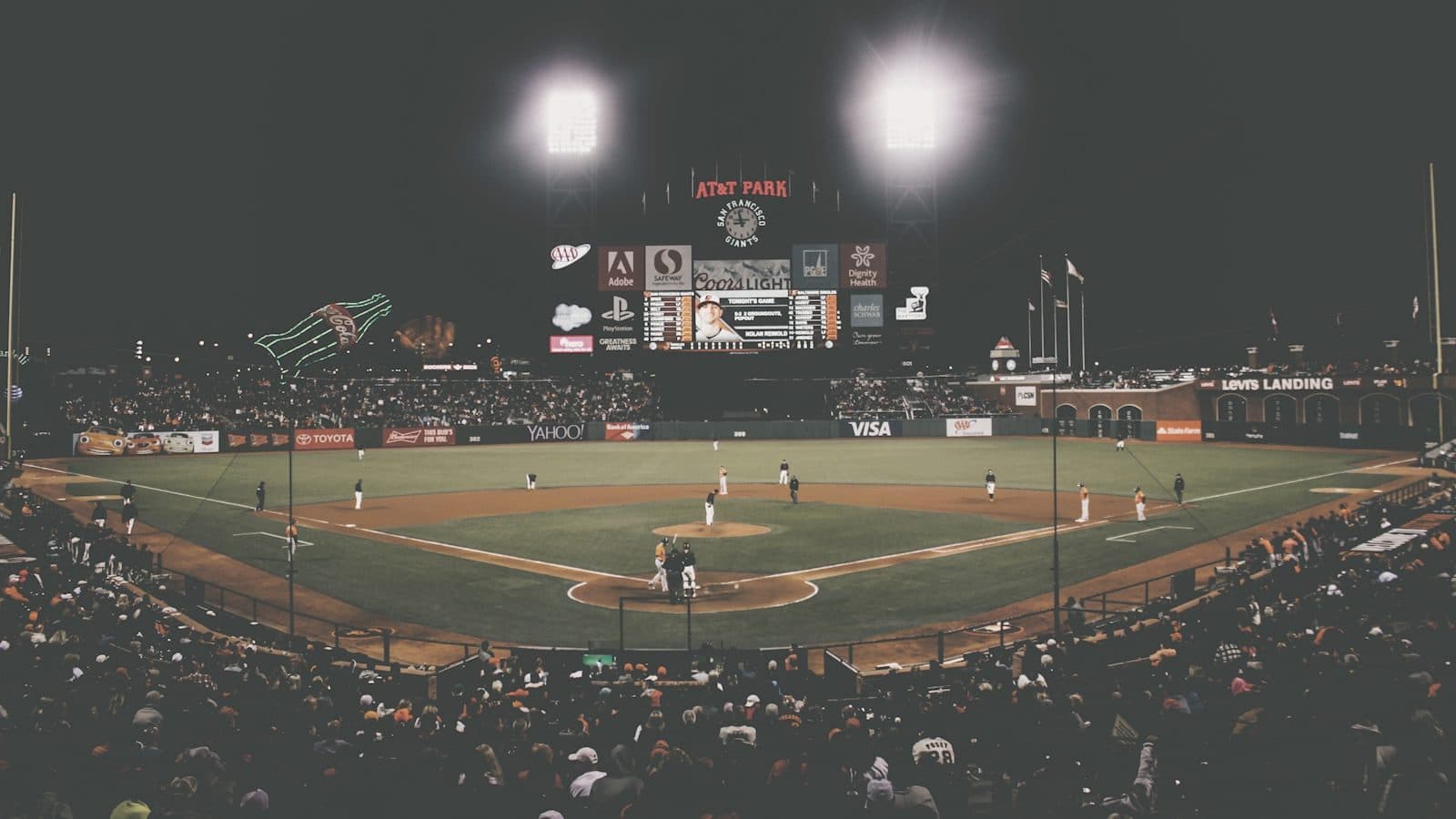
Most baseball facilities run on 5-7 separate software platforms. Add up the subscriptions and processing fees and the stack quietly drains $15,000+ a year. Here's the real math — and the consolidation opportunity.
Sports facility management software for scheduling, payments, programming, and teams — starting at $0/month.
