
Your Data Finally Works for You: Reports v3, Rebuilt Messaging, Registration Insurance, and Everything Else We Shipped This Summer
More than 40 releases since the May Teams rebuild: a new Reporting tab with the Memberships report, machine-learning churn prediction, MRR forecasting, rebuilt messaging infrastructure, registration and gap medical insurance at checkout, and a long list of Teams, membership, and payment improvements.

Since launching the Teams rebuild in May, we've pushed more than 40 releases. Here's what changed, why we built it, and what it means for your facility.
The releases land across the whole connected platform — reporting, messaging, payments, memberships, and team registration and rosters.
Reports v3
We ran an analysis on 1,034 onboarding call transcripts with your account manager before building this. 605 of them brought up reporting, with 1,536 separate requests. Reporting was the most asked-for improvement in the platform, so we rebuilt it from the ground up.
Reports v3 lives in a new Reporting tab on your sidebar. The idea is simple: take the millions of data points across hundreds of facilities in nearly every state and turn them into answers, not exports. Benchmarks, forecasts, and predictions, fit to your facility's data — the same predictive analytics engine behind churn scoring and revenue forecasts, now pointed at every corner of your operation, plus how your facility benchmarks against the market.
The Memberships report
First out of the gate. Across the top you get the four numbers that define a membership business: monthly recurring revenue, active members, customer lifetime value, and churn rate. Every metric has a plain-language explainer built in, so you know exactly what it measures and why it matters.
A few things worth calling out:
- Churn that reflects reality. Baseline separates expected churn from unexpected churn. A seasonal program ending when school starts is not a retention problem, and now your numbers know the difference. Members who switch from one membership to another are counted as switches, not losses.
- Churn prediction. The flagship of the suite. A machine learning model trained on millions of data points scores every member's risk of leaving, using 26 variables weighted to your facility specifically. We back-tested it at 76% accuracy. Click any at-risk member to see what's driving their risk and message them directly from the report.
- Forecasting and seasonality. MRR forecasting broken down month by month, based on how your facility grows, not an industry average. Click into any month to see exactly who joined and who left.
- Cohort retention. See how many of September's new members are still with you in month nine. Change how you onboard, then measure whether it worked. We use this exact tool internally to test our own onboarding, and it's one of the fastest ways to find what keeps members around.
- AI insights on every report. A high-powered AI reads your data and surfaces what matters. Everything is anonymized and tokenized before the model sees it, so your customers' information stays private.
How the churn model works
Every report supports one-click CSV and Excel exports, flexible date ranges, and multi-location views with admin-scoped access, so you can give your staff insights without giving them everything.
More reports, live now
The Revenue report is out, breaking down revenue across your whole operation. Teams got reporting upgrades too, including forecasted cash flow from unaccepted roster offers. We use your historical data to predict which invites will be accepted and which payment plans people will pick, so you can see revenue that hasn't landed yet. Offline payments now have their own daily reports with exports, payment notes, and recollection data.
| Report | What it answers | Where it lives in Baseline |
|---|---|---|
| Memberships | MRR, active members, LTV, churn, and who's at risk of leaving | Membership management |
| Revenue | Where the money came from across your whole operation | Payments and receivables |
| Teams cash flow | Forecasted revenue from roster offers that haven't been accepted | Roster and invite management |
| Offline payments | Daily cash and check activity, payment notes, recollection data | In-person and point-of-sale payments |
We're pairing every report with a walkthrough video and a research study covering what we found in the data. The first one is already live: The State of Sports Facility Memberships. One finding worth stealing now: longer payment cycles are the single easiest lever for lowering churn. If you want the same treatment for team fees, our companion study on the offline tax on getting paid is the one to read next.
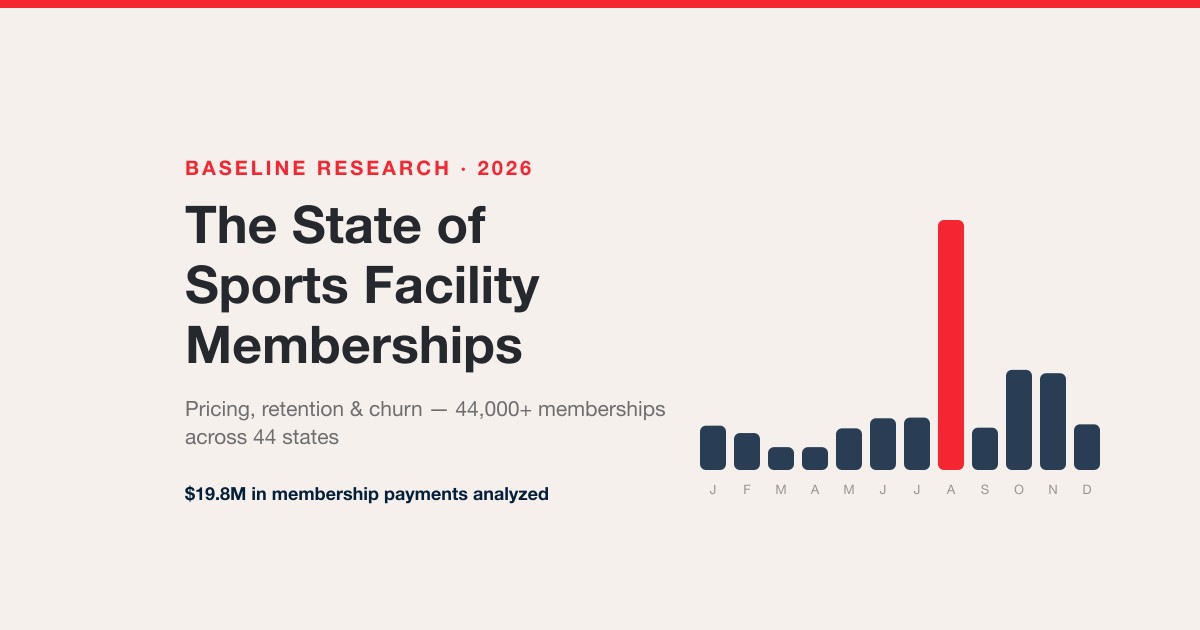
The State of Sports Facility Memberships: Pricing, Retention & Churn Across 44,000+ Memberships
We analyzed membership data across the platform — billing cycles, churn timing, seasonality, and the retention patterns behind them. The finding that shaped this report: longer payment cycles lower churn. Read the full data study.
Read the studyMessaging, rebuilt
We rebuilt our sports facility management software's messaging infrastructure from the ground up, and it's live for everyone. The first large send on the new system delivered 10,300 messages in a few minutes.
Speed is only half of it. You now get email deliverability insights — the kind of opens, bounces, and delivery data you'd expect from a dedicated email tool, right inside Baseline. We also shipped better message search, image standardization, and a long list of sending fixes.
Everything you already send through Baseline rides on the new infrastructure: marketing email campaigns, SMS to your members and families, and the operational sends built from audience building and scheduled sends.
Recollection emails got smarter too. Members with multiple outstanding payments now get one clean batched email instead of a separate message for each charge — the same instinct behind Magic Recollect on the Teams side: one message instead of many.
Registration insurance
Two new protections, built into the platform:
- Team registration insurance lets parents protect their registration fees at registration checkout. If a season gets cut short by injury or circumstance, they're covered. Here's what's covered and what isn't.
- Accident and injury insurance adds gap medical coverage for athletes training at your facility, filling the hole a family deductible leaves behind. Here's how a claim actually gets filed.
Both policies are optional
Teams keeps getting better
The May rebuild was the foundation. This summer we kept building on it. Registrations can now require a real drawn signature. Team questions can be set as unique, so no two roster players pick the same answer (jersey numbers, positions, snack duty). Invitees who accept but haven't finished registering get automatic reminders at 1 hour and 24 hours, delivered through magic links that drop parents straight into the form.
Invite links now route correctly for multi-location organizations, duplicate registrations from the same link get flagged before they happen, and family accounts now support free-for-members pricing on team registrations — an extension of the existing rule that lets you require a membership to register for a team.
Memberships and payments
Members can now apply their facility credit to upcoming membership payments, and facilities can turn on auto-redemption so credit applies automatically — part of the same credit cycles and billing-day controls you already use. Pre-registration memberships let you collect the first payment at signup for a membership or enrollment that starts later, which is built for filling seasonal programs early and pairs naturally with early and member-only registration access. You can also offer a discount on the first payment at checkout, alongside the existing auto-billing and renewal rules.
Under the hood, we standardized transaction accounting across the platform: write-offs, admin discounts, and $0 payments now carry clear statuses, CSV exports include the new fields, and receipts and transaction records pull from a single source of truth. It all reconciles cleanly into the accounting workbook and QuickBooks posting. Less time reconciling, more numbers you can trust.
Waivers got a real overhaul
Signed waivers now save to both the person checking out and the person they're signing for, drawn signatures are included in the signed document, and front-desk staff no longer re-sign waivers on every assisted checkout.
Around the facility
- A new check-in popup built for front-desk operators, sitting alongside keyless entry and self check-in.
- A grid event builder that pulls names and prices automatically for lessons and rentals, inside the event builder and scheduling grid.
- A richer transactions view on every athlete profile, so you see what matters without clicking into each charge.
- Faster user search on large accounts.
- Family linking suggestions at signup, so parents and kids get connected from day one.
- Smarter phone verification that catches landlines and invalid numbers with clear instructions instead of cryptic errors — part of the same verification and data-quality layer that keeps duplicate users out of your reports.
We're also deep into two bigger builds: a ground-up rebuild of the Google Calendar integration, now live in testing with a full rollout underway, and the Baseline mobile app, which is in submission prep now.
What's next
Reports v3 is a series, and Memberships is just the first chapter. Member Health is next, with a walkthrough video and research study to match — built on the same churn model already shipping in the platform. If you want a guided tour of any of this, schedule time with your account manager. We're happy to walk through it.
If you're already on Baseline, these updates are live. If you're not, you can see the platform at baselinepro.com, or book a demo.
Run your facility. Not your software.
Baseline is the all-in-one operating system for sports facilities, clubs, and travel teams — scheduling, payments, programming, and team management in one platform.
Keep reading
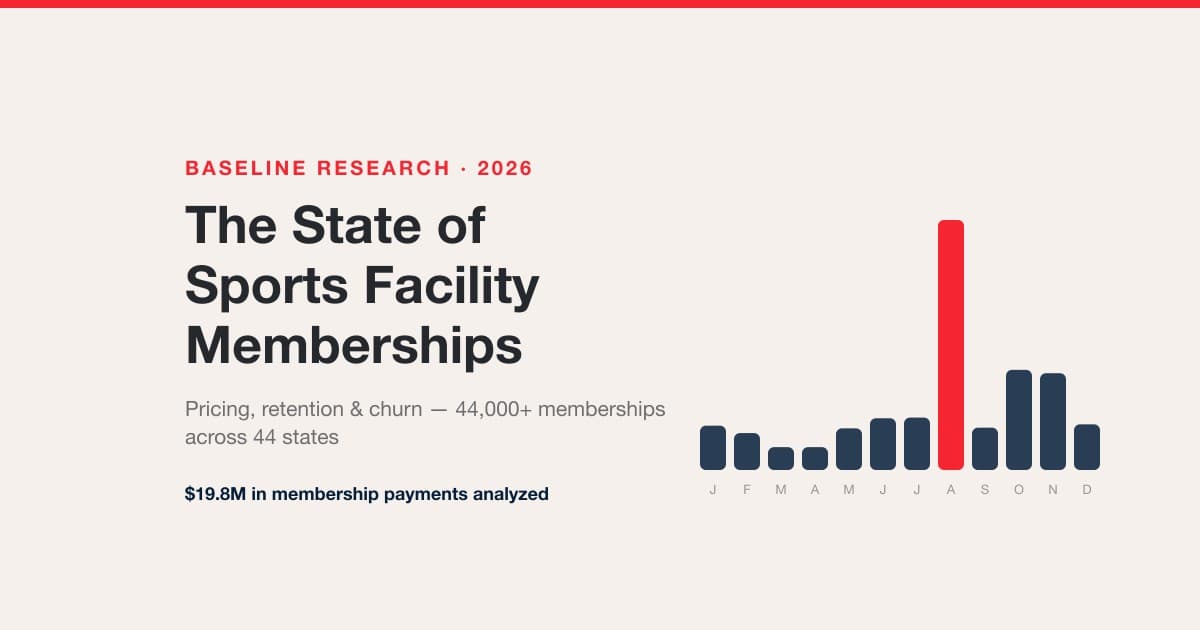
The State of Sports Facility Memberships: Pricing, Retention & Churn Across 44,000+ Memberships
We analyzed 44,000+ memberships and $19.8M in membership payments across hundreds of sports facilities in 44 states. What facilities charge by state, which membership styles retain, why annual billing doubles lifetime value, and the churn playbook the data supports.
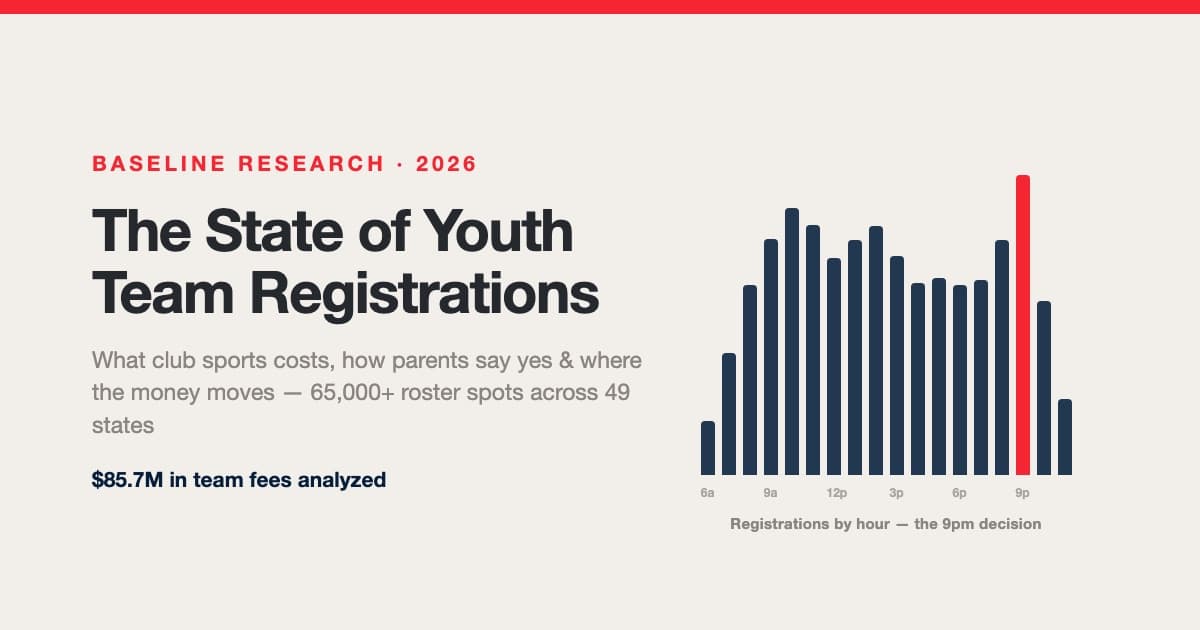
The State of Youth Team Registrations: What Club Sports Costs, How Parents Say Yes & Where the Money Moves
We analyzed 65,000+ roster spots and $85.7M in team fees across 337 club businesses in 49 states. What a season really costs by age and state, the $300 deposit standard, the ~15-point collection tax on cash-and-check dues, the 3x recollection gap between clubs — and the one screen where families pause on the way to a completed registration.
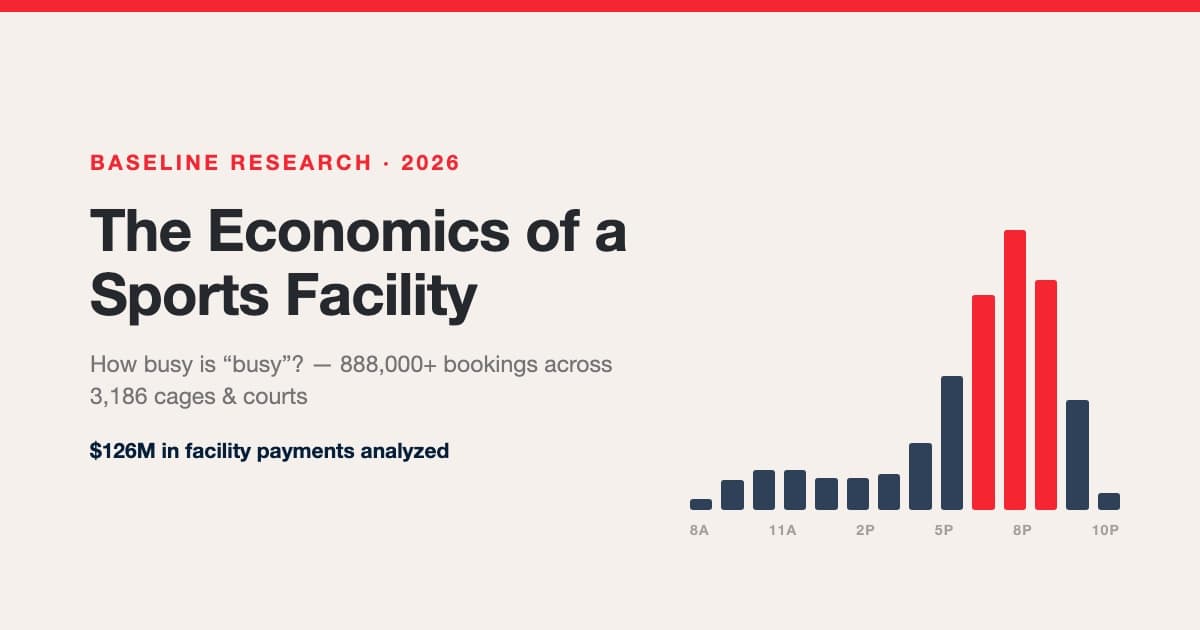
The Economics of a Sports Facility: How Busy Is Busy, What a Space-Hour Is Worth, and How the Packed Facilities Got That Way
We analyzed 888,000+ bookings, 863k space-hours, and $126M in payments across hundreds of sports facilities. Real utilization benchmarks (facilities are spiky, not empty — 2 in 3 sell out prime hours while averaging ~19% occupancy), rentals vs lessons vs group economics, the true lesson margin after trainer splits, credit-pack accounting, seasonality by category, and the occupancy ladder from quiet to packed.